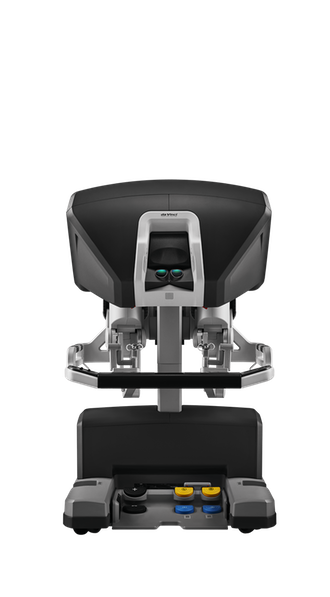

The years from 2025 to 2030 may prove to be a period of accelerated healthcare transformation in Central and Eastern Europe. The key strategies undergoing implementation in 2026 aim to narrow the gap between AI’s potential and its current level of adoption. Despite positive trends the medical sector has ample space to catch up. Hospitals will undergo a robust transformation in respect of computerization while trends involving the utilization of robotics, AI and automation are also making more pronounced inroads into the Baltic States where Synektik already has a footprint. Approximately 4.8 thousand procedures using surgical robots were performed in 2025 in Poland versus nearly 262 thousand procedures that year in just general surgery, which is the largest market utilizing robotic surgery across the globe. That means that merely about 2% of all procedures are performed using this technology. By comparison, the pertinent figure for the United States is some 15%. Overall, Central and Eastern Europe is 5-10 years behind Western Europe in terms of the penetration of surgical robotics, AI utilization and automated pharmacy dispensing systems. New funds originating from the National Recovery and Resilience Program, regulatory pressure and the medical personnel gap may change that.
“Approximately 21.3 thousand procedures using surgical robots were performed in 2025 in Poland. That sounds impressive until we juxtapose that figure with the total number of procedures of about 341.5 thousand. That means that only about 6% of the procedures that could be performed using robots are currently being performed using this technology. This percentage slips to a mere 2% in general surgery alone. While there are nearly 262 thousand procedures performed per annum, only about 4.8 thousand are performed robotically. We really have a lot of work to do to catch up. Even so, the direction to follow is clear”, says Cezary Kozanecki, CEO of Synektik. “That is just scratching the surface of the trends that will make their mark in upcoming years. Through our report we want to show medical robotics as the inevitable future, something that must transpire. Everybody will derive benefit from this trend: patients, physicians and the Polish economy. The data indicate that the CEE region has a lot to do to catch up. For the sake of comparison, the United States performs 15% of all general surgery using robotic procedures. This is an important benchmark showing the direction the market will take. Nor should one forget about the trends involving the computerization of hospitals, cloud-based solutions and the demand for robotic technologies in the Baltic States region”, adds Cezary Kozanecki.
The global market is growing – the business model is evolving
The results of Intuitive Surgical, the global leader in surgical robotics demonstrate the magnitude of this transformation. In 2025 it generated revenue of USD 10 billion, with 84% of that representing recurring revenue. More than 3.2 million procedures were performed using Intuitive’s systems, signifying 18% growth year on year. Globally, there are more than 12,000 Intuitive systems in operation in more than 70 countries.
Concurrently, the market is also undergoing a structural shift in its model as it moves away from the one-off sale of hardware to generating revenue on maintenance, procedures and software. Synektik reflects this trend: the share of recurring revenue has climbed from 31% (2022) to 51% (2024) on a CAGR of 66% over the last 3 years.
Five segments portending the greatest upside
The report identifies the segments offering the highest rate of growth up to 2030: diagnostic AI (a market of USD 1.6 billion → USD 5.44 billion, a CAGR of 22.46%), healthcare cloud (USD 54.69 billion → USD 93.41 billion, a CAGR of 11.3%), medical data interoperability is driven by the EHDS directive, surgical robotics (a CAGR of 14.8%) and the automation of hospital pharmacies – where penetration in the CEE is 2-3 times lower than in Western Europe. In turn, under 10 systems have been rolled out to-date in Poland of the overall potential of roughly 350 pharmacies.
Regional expansion as a growth lever
Synektik is expanding its operations beyond the markets it currently serves in Poland, the Czech Republic and Slovakia. It has secured the status of sole distributor of the da Vinci systems in Ukraine (whose operational launch is slated for 2026) and it is entering the Baltic markets – in May 2026 a physician from the University Clinical Hospital in Rzeszów performed the first robotic procedure in Latvia. In total, expansion will span a potential market of approximately 37 million additional inhabitants.
Regulations as a demand catalyst
The EU regulations undergoing implementation – EHDS (the obligation to certify EHR and interoperability systems by 2029), the EU AI Act (dual compliance MDR and the AI Act for AI tools in diagnostics) and the NIS2 directive (hospitals as critical infrastructure) – are driving the regulatory-induced demand for technological modernization. Funds from the NRRP act as a supplement: roughly 4.4 billion PLN earmarked to digitize healthcare in Poland from 2025 to 2027.