
The IT business of Synektik Group, focused, among other things, on the development and commercialisation of specialised IT systems dedicated to the healthcare sector, including the Zbadani.pl platform, is on track to achieve record results in the 2025 financial year. The sharp increase in the scale of operations is driven by organic growth, including in proprietary products, as well as a successful acquisition.
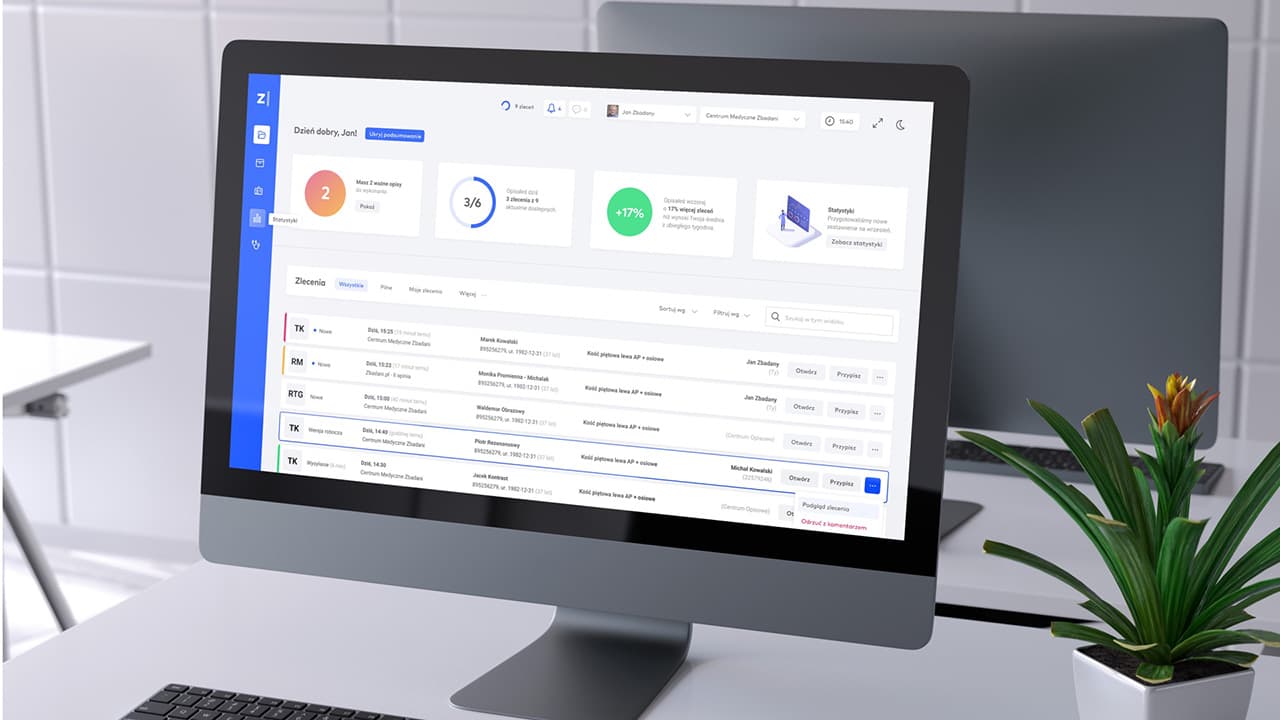
In the current financial year, the Group’s IT segment has the potential to generate several times higher sales than in the previous year, strengthening its position as the Group’s third-largest business area (after robotics and radiopharmaceuticals), with an approximately 8% share of total domestic revenue. As part of this business, Synektik provides healthcare facilities with proprietary IT solutions, including PACS/RIS systems used to manage medical imaging data (the results of CT, MRI, X-ray and ultrasound examinations). The Group is also developing the Zbadani.pl medical platform, a solution revolutionising, among other things, the flow of radiological examinations. Offered on a SaaS basis, the platform enables patients to securely access the results of imaging examinations online, as well as facilitates the sharing of imaging studies (and accompanying documentation) between medical facilities. The platform also includes the SynDose module, which enables the monitoring and analysis of ionising radiation doses, helping medical imaging departments ensure patient safety. With more than 50 specialists, the Group’s IT team is one of the largest teams within the Synektik Group..
One of the catalysts for the dynamic development of the Group’s IT business was the acquisition of IT4KAN, completed in January 2025. – The combination of the Synektik and IT4KAN teams has created the potential for even more effective expansion in the healthcare IT solutions market. With more than 230 PACS system customers, we are one of the leading players in this segment of the Polish market, providing customers with proven solutions that are continuously developed. We are consistently expanding the Zbadani.pl platform, which is attracting growing interest. The number of platform users has already exceeded 30,000, while in the first nine months of the current financial year alone, 40% more patients joined the platform than throughout 2024. Our IT business is an important component of the Group’s business model, both due to the recurring nature of revenues generated in this area and their profitability – comments Dariusz Korecki, Vice President of the Management Board of Synektik.
The successful year for the Group’s IT business has been capped by the acquisition of two projects for the Centre for e-Health, financed with funds from the National Recovery and Resilience Plan (KPO). A consortium led by the Synektik Group submitted the most advantageous bids covering, among other things, the delivery, implementation and maintenance of artificial intelligence (AI) models for detecting breast lesions in mammograms and pathological findings in chest X-rays, analysing imaging data, together with the integration of the solutions with the Intelligent Services Platform as part of Lots IV and V of the KPO e-Health project. The contract for the mammography solutions, worth PLN 11.0 million net, has already been signed, while the signing of the contract for chest X-ray solutions, worth PLN 13.2 million, is expected in the coming weeks. As part of the project, the consortium comprising Synektik and its Czech partner Carebot will deliver, implement and maintain the AI solutions. Carebot is the technology partner responsible for the AI models for mammography and chest X-ray analysis, supplied under the Carebot brand, certified as medical devices under the MDR and already in clinical use in hospitals across more than 15 countries. Synektik is responsible, among other things, for integration with the Intelligent Services Platform, deployment of the solutions across the entire network and their ongoing maintenance.
The years 2025–2030 could prove to be a period of accelerated transformation of healthcare in Central and Eastern Europe. The European Union is introducing a number of regulations that will directly drive investment in medical technology. – EHDS (the European Health Data Space) will require hospitals to certify electronic health record systems and ensure their interoperability by 2029, which in practice means that outdated IT systems will need to be replaced or upgraded in thousands of healthcare facilities across the EU. The EU AI Act introduces a dual certification requirement for AI tools used in diagnostics, meaning that healthcare facilities will have to comply both with medical device regulations (MDR) and the new artificial intelligence regulations. NIS2 is a cybersecurity directive that has brought hospitals under the category of critical infrastructure, alongside power plants and water networks, requiring them to implement specific standards for data protection and business continuity. Each of these regulations requires the implementation of new solutions and tools, while healthcare facilities that fail to adapt their IT systems face financial penalties and the loss of certification – adds Rafał Dunal, Director of Business Development for IT at Synektik Group.